
I used to think tasting rum meant taking a sip, nodding, and deciding whether I liked it. That works fine for picking a mixer, but it does not tell you much about what is actually in the glass. Professional tasters break the process into stages, and once I started copying that structure, I noticed things in bottles I had owned for months without really noticing anything at all.
This is not a guide to which rum to buy. If you want that, the Hub already covers it. This is what happened when I slowed down and actually paid attention to a glass I already had open.
The glass matters more than I expected
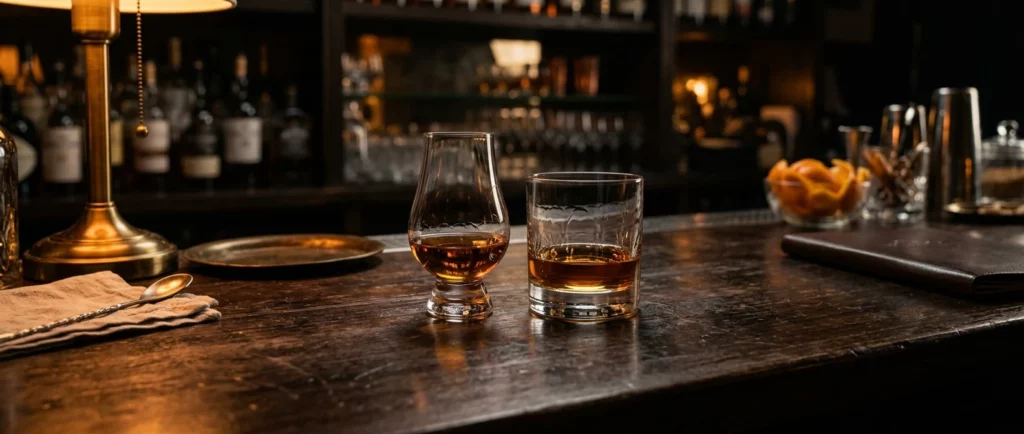
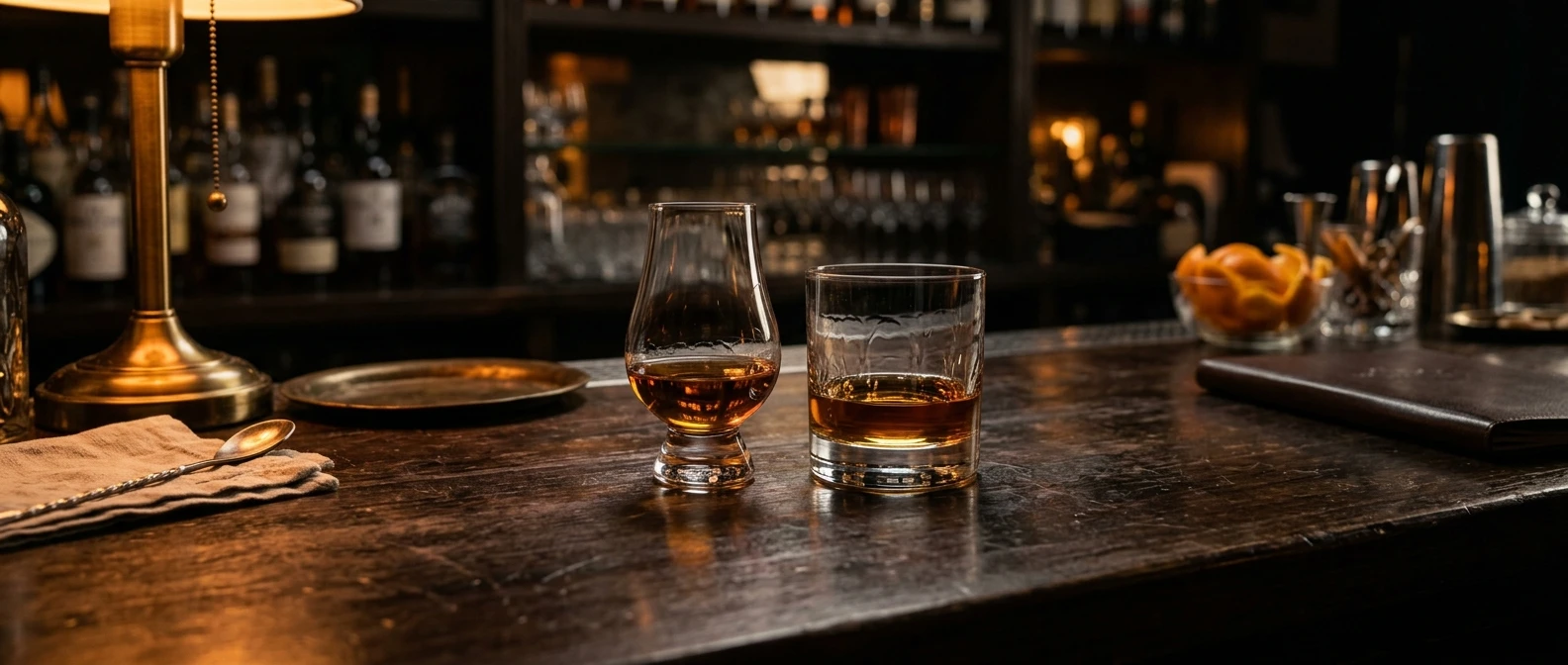
I started in a rocks glass, because that is what sits next to the bottle on my counter. It turns out that shape works against you. A wide-mouthed glass lets aroma scatter before it reaches your nose, and a lot of what makes rum interesting lives in the aroma, not just the taste.
Switching to a tulip-shaped glass, the kind used for whisky nosing, concentrated everything. The narrower opening holds the vapor near the rim instead of letting it spread across the room. A small tasting glass or even a wine glass with a narrower top does the same job. The rocks glass is still the right call for a drink with ice in it, but for sitting down and actually tasting the spirit, the shape of the glass changes what reaches you before the rum even touches your lips.
Why I started adding a few drops of water before nosing
Rum usually comes out of the bottle somewhere between 40% and 46% alcohol, sometimes higher. At that strength, the alcohol itself dominates the nose. It is sharp enough to numb your sense of smell a little, which means the first few passes over the glass mostly just tell you “this is strong,” not much else.
A few drops of still water, added right before nosing, lowers the proof just enough to let other smells surface without washing the rum out. I use an eyedropper for control, though a small spoon works if that is what is on hand. The change is noticeable: fruit, spice, and wood notes that were buried under alcohol heat start to come forward. This is standard practice among whisky and rum tasters for a reason. It is not about diluting the drink, it is about giving your nose a fair shot at the rest of what is there.
Breaking the aroma down into something I could describe
Nosing a rum and saying “it smells good” is not useful information, even to yourself. What helped was approaching the aroma in categories instead of trying to name one single smell.
I started asking specific questions on each pass over the glass:
- Is there fruit, and if so, is it fresh fruit like banana or dried fruit like raisin and fig?
- Is there sugar, and does it read as caramel, molasses, or something closer to vanilla?
- Is there wood, and does it smell like fresh oak, char, or something closer to spice like cinnamon or clove?
- Is there anything funky or vegetal underneath, grassy or earthy notes that show up in some rums, especially pot still styles?
Nosing in short passes rather than one long inhale kept my nose from fatiguing. A few seconds over the glass, a break, then back again. The aroma rarely gives up everything on the first try, and going back a second or third time after the glass has had a minute to open up often reveals something that was not there at first.
Tasting in stages: entry, mid-palate, finish
The actual sip is where this method changed the most for me. Instead of one swallow, I started treating the taste as three separate moments.
Entry is the first half-second the rum touches your tongue, before it has moved anywhere. This is often where you notice sweetness or sharpness right away, the initial impression before anything else develops.
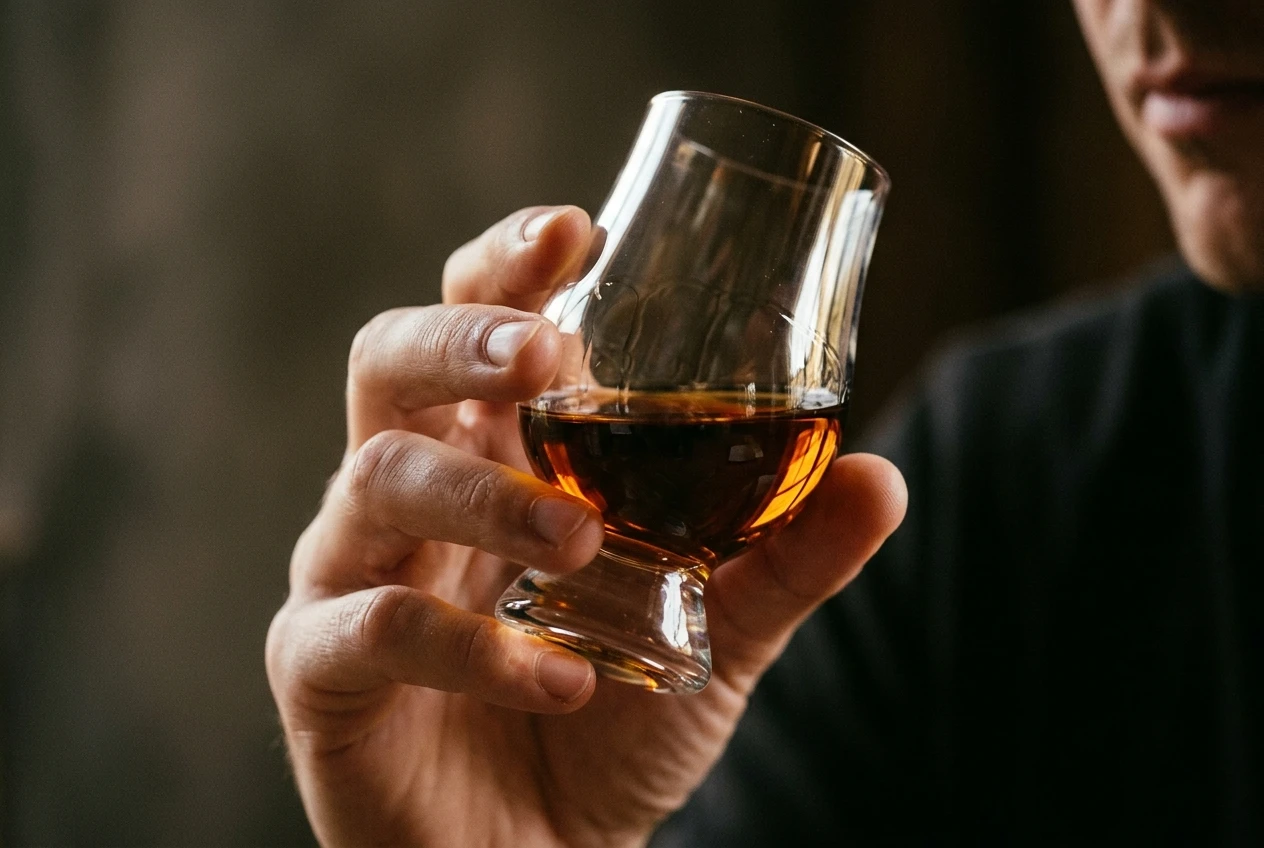
Mid-palate is what happens as the rum sits in your mouth for a second or two longer. Flavors shift here. A rum that opened sweet on entry might turn toward spice or dried fruit by mid-palate. This is usually the richest part of the taste if you give it time instead of swallowing right away.
Finish is everything that happens after you swallow, how long the flavor lingers, and what it turns into as it fades. Some rums finish short and clean. Others leave oak, pepper, or a lingering sweetness that changes character the longer it sits. The length and shape of the finish tells you a lot about how the rum was aged and how it will behave in a cocktail, since a long finish can carry through other ingredients while a short one disappears under them.
Tasting this way takes longer than a regular sip, maybe ten or fifteen seconds per taste instead of two. That is the point. The information is there in the glass whether you take the time to notice it or not.
Building a vocabulary that actually meant something to me
Professional tasting notes can sound like a foreign language, full of words like “esters” and “congeners.” I did not need that vocabulary to get value out of this. What helped more was building a small, personal list of words that matched what I was actually noticing, caramel, banana, leather, black pepper, orange peel, and sticking with those instead of reaching for fancier terms that did not mean anything specific to me.
The goal of vocabulary here is not to sound like a critic. It is to be able to compare one rum to another using the same words each time, so that six months later I can look at a note and remember what the rum actually tasted like, not just whether I liked it.
Keeping a simple tasting journal so I’d remember what I learned
Without writing anything down, every rum blurs into the last one tasted. A tasting journal does not need to be elaborate. For each rum I noted the name, the proof, the glass and water ratio used, and then a few lines under nose, entry, mid-palate, and finish, using the same categories every time.
What surprised me was going back to notes from a few weeks earlier and realizing how much I had forgotten. A rum I remembered as “pretty good” turned out, according to my own notes, to have a short finish and almost no spice, details that mattered when I was later choosing something for a specific cocktail. The journal is less about having a record for its own sake and more about training your memory to hold onto specifics instead of vague impressions.
How tasting this way changed the rums I reach for
Once I had actual notes instead of general impressions, picking a rum for a specific drink got a lot easier. A rum with a short, clean finish and bright fruit on the nose works differently in a cocktail than one with a long, spicy finish and heavy oak. Knowing that in advance, rather than guessing at the bar, changes which bottle gets pulled off the shelf.
That connection between tasting notes and mixing decisions is covered in more depth over on Choosing The Right Rum For Different Cocktails, which looks at how the character of a rum, light versus dark, aged versus unaged, spiced versus plain, should guide what you build around it.
Where this fits once you’re ready to compare bottles
Tasting this way is also useful before you buy, not just after. Once you know what to look for in the nose and across the three stages of a sip, comparing two bottles side by side in a shop or at a tasting event becomes a lot less like guessing. If you are at the point of expanding what is on your shelf, How To Choose Quality Rum For Your Home Bar walks through what separates a well-made rum from one riding on packaging alone, and this tasting method is exactly how you would confirm it for yourself.
Pick one rum you already own, pour a small neat glass, and run it through these stages before your next cocktail night. Then check Choosing The Right Rum For Different Cocktails to see how what you noticed changes what you mix.